Short answer: how do you spot a quality supplement?
A quality supplement always has three things at once: the active form is named (e.g. ”magnesium glycinate,” not just ”magnesium”), the dose per serving is a specific number, and the brand has third-party testing or transparent batch data. If the label instead shows an unnamed ”complex” measured only in grams, or a vague claim like ”boosts immunity,” put it back. For protein powder and fish oil, also look for a recognised mark such as NSF or IFOS.
- The label lists a blend name and total weight (e.g. ”complex 1500 mg”) with no individual amounts: skip it — that almost always means the doses are too small to do anything.
- The label promises ”10,000% vitamin A” or a large fat-soluble dose with no testing mentioned: put it back — toxicity is real for vitamins A, D, E and K, and for chronically high B6 doses.
- An evidence-based pick from our range: Omega 3 D3+K2 – OstroVit or OstroVit Vitamin D3 + K2 + Calcium 90 tablets — see the category.
This isn’t medical advice — if you’re pregnant, breastfeeding, taking prescription medication, or managing a health condition, check with your doctor or a registered dietitian before starting a new supplement.
In stock now: Dietary supplements

Whey Protein 80 1kg – Whey Protein – Iconfit
Proteins 31,90 € Select options This product has multiple variants. The options may be chosen on the product page 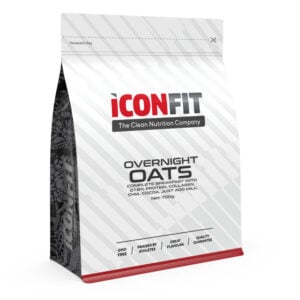
ICONFIT Overnight Oats Porridge (1000g)
Breakfast 11,90 € 5,90 € Select options This product has multiple variants. The options may be chosen on the product page 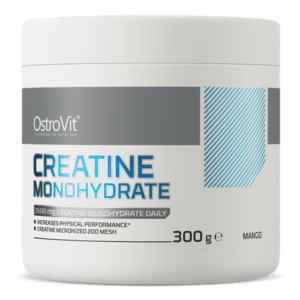
Creatine Monohydrate – 300g – OstroVit
Creatine 9,30 € Select options This product has multiple variants. The options may be chosen on the product page
In Part 1 we walked through the seven most popular supplements. In Part 2 we mapped the life stages and lifestyles where targeted supplementation really earns its place. This is the practical buying article — how to read a label confidently, which active forms make a real difference, what to know about drug interactions, and a simple decision tree that should keep you from wasting money.
By the end, you should be able to walk past 80% of the supplement shelf without flinching, and spend the remaining 20% with confidence.
The 3-second quality check (recap)
You saw this in Part 1, but it’s worth repeating because it covers most of the work:
A quality supplement has all three of these.
- The active ingredient form is named (e.g., ”magnesium glycinate”, not just ”magnesium”)
- Specific doses per serving (e.g., ”300 mg KSM-66 root extract”, not ”Energy Blend 1500 mg”)
- A reputable brand with third-party testing, transparent batch info, or recognised quality marks
Below we go deeper on each of those — starting with the certifications worth looking for.
1. Third-party certifications — what each one verifies
Independent testing organisations test products and verify what’s on the label. These aren’t perfect, but they’re the closest thing to a quality guarantee in an industry where pre-market efficacy testing isn’t required.
The marks worth looking for.
- USP Verified (United States Pharmacopeia) — confirms the product contains the listed ingredients at labelled potency, free of contaminants, manufactured under good practices.
- NSF Certified for Sport — gold standard for athletes. Tests against 280+ banned substances. Even non-athletes benefit from the same scrutiny.
- Informed Sport / Informed Choice — British alternative to NSF; tests every batch, not just the original formula.
- IFOS (International Fish Oil Standards) — specific to omega-3. Tests for oxidation (TOTOX), heavy metals, PCBs. For fish oil, this is the single most important quality signal.
- ConsumerLab — subscription-based independent testing service. Their results regularly surprise both ways: premium brands fail; budget brands sometimes pass.
Practical rule. For protein powder and fish oil, look for one of these marks. For vitamins and minerals, look for EFSA-approved health claims on the label plus a reputable brand history. Increasingly, quality manufacturers publish Certificates of Analysis (CoA) for every batch — also a strong signal.
2. Active forms that make a real difference
The ”magnesium 400 mg” on two different bottles can mean wildly different amounts of usable magnesium in your bloodstream. Here are the forms where choosing right matters most.
Magnesium (covered in detail in Part 1):
| Form | Best for |
|---|---|
| Glycinate / bisglycinate | Sleep, stress, sensitive stomachs |
| Citrate | General repletion, gentle regularity |
| Malate | Fatigue, fibromyalgia |
| L-threonate | Cognitive support (early evidence) |
| Oxide | Cheap, mostly excreted — skip |
Vitamin B12 — Methylcobalamin (active form, often sublingual) and cyanocobalamin (synthetic, cheaper) both raise blood levels effectively. Choose by preference and price.
Vitamin D — D3 (cholecalciferol) is what your skin makes and what almost all evidence is based on. D2 is less effective. Choose D3 unless you specifically need a vegan version (lichen-derived D3 is now widely available).
Vitamin K2 — MK-7 (long half-life, once-daily) is the modern standard; MK-4 requires multiple daily doses.
Folate — Folic acid is the standard, well-absorbed by almost everyone. L-methylfolate (5-MTHF) is preferred by people with MTHFR variants who don’t convert folic acid efficiently.
Iron — Bisglycinate is well-absorbed and gentle. Ferrous fumarate is the standard. Ferrous sulfate (cheap) causes more GI side effects.
Creatine — Monohydrate has all the evidence. ”HCl”, ”buffered”, ”ethyl ester” are not meaningfully better — just more expensive.
Omega-3 — Triglyceride form (TG) or re-esterified triglyceride (rTG) are well-absorbed. Ethyl ester (EE) is cheaper, slightly less absorbable. For fish oil specifically, EPA + DHA combined per serving is the only number that matters. EFSA confirms 250 mg/day supports normal heart function; 500 mg/day is a common daily target; 1000+ mg/day for specific therapeutic goals (high triglycerides, post heart attack).
3. Label red flags — when to put the bottle back
If a label has any of these, slow down or skip it.
- Proprietary blends — ”Energy Complex: 1500 mg” with 12 ingredients and no individual amounts. Almost always means the active doses are too low to do anything useful.
- Mega-doses of fat-soluble vitamins — ”10,000% RDI of vitamin A” or ”20,000 IU vitamin D, no testing required”. Toxicity is real for A, D, E, K — and for chronic high-dose B6 (over 100 mg/day, peripheral neuropathy).
- Vague claims — ”detoxify”, ”cleanse”, ”boost your immune system”. Marketing language with no specific pharmacology behind it. Your liver detoxifies itself; ”immune boosting” is biologically meaningless.
- Massive added sugar — a ”mass gainer” with 100 grams of carbs from maltodextrin is selling you sugar with a protein label. A pre-workout with 25 grams of various sugars is a drink.
- Disease claims — ”treats arthritis”, ”cures depression”, ”prevents cancer”. EU regulation forbids these on supplements. A brand willing to flout the rules is a brand to skip.
- Missing batch numbers or expiry dates — quality manufacturers track these confidently. Their absence is a warning.
4. Drug interactions worth knowing
If you take prescription medication, every new supplement deserves a thirty-second check for interactions. This is a short list of the recurring ones:
| Medication | Watch out for | What can happen |
|---|---|---|
| Warfarin (Marevan) | Vitamin K, high-dose E or fish oil, ginkgo, garlic, St John’s Wort | Altered INR — bleeding or clotting risk |
| SSRIs / SNRIs (most antidepressants) | St John’s Wort, 5-HTP, tryptophan | Serotonin syndrome (potentially life-threatening) |
| Statins | Grapefruit, red yeast rice | Increased statin levels, muscle toxicity risk |
| Levothyroxine (Eltroxin, Euthyrox) | Iron, calcium, magnesium, coffee, ashwagandha | Reduced absorption (separate by 4 hours) |
| Diabetes meds | Chromium, alpha-lipoic acid, berberine | Additive blood-sugar lowering, hypoglycaemia risk |
| Blood pressure meds | Liquorice root, high-dose caffeine | Reduced effectiveness or spikes |
| Birth control pills | St John’s Wort | Reduced effectiveness, breakthrough pregnancy |
A practical shortcut. St John’s Wort is unsafe with roughly half of all prescription medications — if you take any prescription, don’t take it without checking specifically. Grapefruit interacts with dozens of medications. Iron, calcium, magnesium and zinc compete with each other for absorption — separate by at least 2 hours.
5. The food-first decision tree
Compressed into a single approach: this is the framework that keeps you from buying bottles you don’t need.
Step 1 — Food first. Are you eating 5+ portions of fruit and vegetables a day? Protein in three or four meals? Oily fish twice a week? Whole grains, legumes, nuts, seeds? If most of these are yes, your nutrient bases are largely covered and supplements should be specific and small.
Step 2 — Test what you can. The supplements with the clearest ”should I take this?” answer are the ones you can measure:
- Vitamin D (25(OH)D blood test, €10–20) — answer the winter question
- Ferritin — especially for menstruating women, vegans, endurance athletes
- Vitamin B12 — for vegans, adults over 60, long-term acid-suppression users
- TSH / free T4 — before considering iodine or selenium
A once-a-year basic panel (D, ferritin, B12, TSH, full blood count, lipids, HbA1c) costs €40–80 and answers most of the practical supplement questions.
Step 3 — Supplement intentionally. Once steps 1 and 2 are done, the picks are usually small and specific:
- Vitamin D 1000–2000 IU/day October through April (more if a test confirms deficiency)
- Omega-3 if fatty fish intake is low
- Creatine 3–5 g/day if you train hard or are over 60
- Magnesium glycinate at night if sleep is poor or you train hard
- B12 if vegan, vegetarian, over 60, or on long-term acid suppression
- Iron if a test confirms deficiency
- Folic acid before and during early pregnancy
- A KSM-66 ashwagandha for stressful seasons
A quality stack from our catalogue (one product per most-common evidence-based need):
- ICONFIT Vitamin D3 4000 IU — daily winter essential
- OstroVit Magnesium Glycinate 90 capsules — sleep, stress, recovery
- OstroVit KSM-66 Ashwagandha 120 tablets — adaptogen for stressful seasons
Frequently Asked Questions
How do I read a supplement label and spot poor quality?
Check whether the label discloses the exact amount of each active ingredient or hides them behind a proprietary blend. Quality supplements always name the specific chemical form (such as magnesium glycinate rather than just magnesium) and avoid unnecessary artificial additives.
What is the difference between mineral oxides and organic chelates/citrates?
Mineral oxides (like magnesium oxide or zinc oxide) are cheaper but poorly absorbed (often only 4–10%) and can cause digestive discomfort. Amino acid chelates and citrates offer far superior bioavailability and are gentle on the stomach.
Which quality certifications should you look for on the package?
Look for manufacturers complying with GMP (Good Manufacturing Practice), HACCP, or ISO standards, and brands that verify purity and active ingredient potency through independent third-party laboratory testing.
Which common supplement interactions hinder absorption?
Calcium and iron compete directly for absorption and should be taken at separate meals. High doses of zinc also compete with copper. For a highly bioavailable daily mineral, consider OstroVit Magnesium Glycinate 90 capsules, and for essential fats, ICONFIT Omega 3-6-9 — explore the all dietary supplements.
The honest bottom line
The supplement aisle is overwhelming, but the evidence-based stack for most people is small and inexpensive. Pick the few that match your specific situation, choose quality versions in the right active forms, and skip the rest.
If this three-part series helps you spend half as much money on supplements and feel twice as confident about the ones you do buy, it has done its job.
This guide is for general wellness information and is not a substitute for personalised medical advice. If you’re pregnant, breastfeeding, taking prescription medication, or managing a specific health condition, please talk to your doctor or registered dietitian before starting any new supplement.