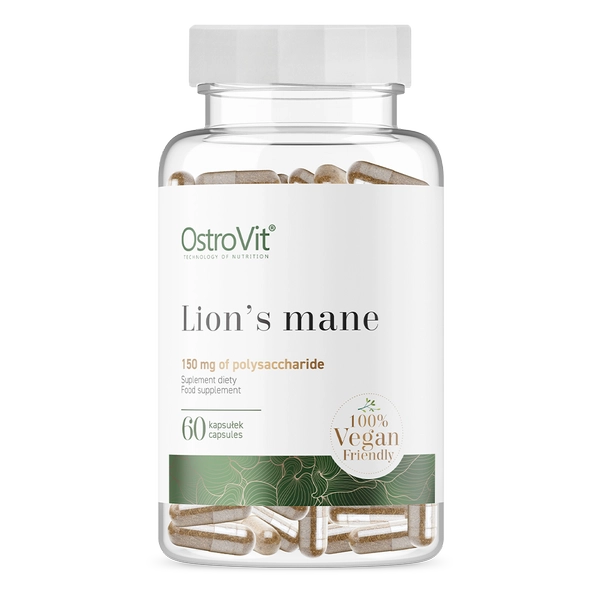
Quick answer: which Lion’s Mane should you pick?
For everyday use, capsules with a concentrated extract are the simplest choice — precise dose, nothing to measure. Powder (whole fruiting body) suits more experienced users who want a higher dose or like mixing it into a smoothie or coffee. The effect builds up over time rather than hitting right away: expect the first changes within 2–4 weeks, with the fuller effect only after 8–16 weeks.
- Everyday use, if you’re just starting out: capsule extract — precise dose, nothing to measure.
- Higher dose or mixing into a smoothie/coffee: powder (whole fruiting body) — more flexible, but you need a larger amount.
- If you’re unsure which to pick: OstroVit Lion’s Mane 60 capsules is our overall top recommendation for most people — browse the full range: the category.
This is not medical advice — if you take blood thinners, are pregnant or breastfeeding, or have surgery coming up, talk to a doctor before use.
In stock now: Plant extracts
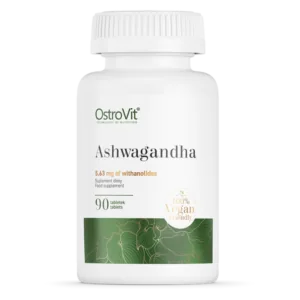
Ashwagandha – OstroVit
Plant extracts 9,90 € Select options This product has multiple variants. The options may be chosen on the product page
Lion's Mane (Hericium erinaceus) is an edible medicinal mushroom known as "nature's nootropic" and "brain mushroom" — it is one of the few known natural compounds that stimulates brain neuroplasticity through the production of NGF (nerve growth factor) and BDNF (brain-derived neurotrophic factor). Lion's Mane has become the center of the nootropic trend of the last 5 years thanks to research on Alzheimer's prevention, memory improvement, and mood support. In this guide, we explain how Lion's Mane works, what dosage is optimal, capsules vs. powder, and how to combine it with other brain supplements.
Last updated: September 2026

What is Lion's Mane and how does it work?
Lion's Mane is an edible mushroom that grows mainly on dead tree trunks in the forests of North America and Asia. Its appearance resembles the white hair of a lion's mane — hence the name. It has been traditionally used in Chinese and Japanese medicine for centuries. Scientific interest exploded in the late 1990s when Japanese researcher Hirokazu Kawagishi discovered two unique classes of compounds in the mushroom:
- Hericenones — found in the fruiting body (edible part) of the mushroom. Stimulates the synthesis of NGF (Nerve Growth Factor) in the brain → growth of new neurons and protection of existing ones
- Erinacins — found in the mycelium (the "roots" of the mushroom). Cross the blood-brain barrier and protect neurons from oxidative stress
NGF is a protein that is essential for the development, maintenance, and function of neurons. As we age, NGF levels decline, which is one of the cornerstones of Alzheimer's disease and age-related memory loss. Lion's Mane is one of the few natural compounds known to increase NGF levels.
Uses of Lion's Mane
Lion's Mane is a multifunctional nootropic — the same mushroom supports various brain functions, from students to the elderly:
Memory and cognitive performance
A 2009 randomized Japanese study (Mori et al.) found that participants aged 50 to 80 who took 3,000 mg of Lion's Mane daily for 16 weeks significantly improved their cognitive test scores compared to a placebo. The effect waned after the study ended — suggesting that regular use is important. In students, Lion's Mane may improve concentration, working memory, and retention of information during learning.
Mood and anxiety relief
A 2010 study (Nagano et al.) showed that 4 weeks of 2000 mg of Lion's Mane daily reduced symptoms of anxiety and depression in middle-aged women. The mechanism is thought to be related to increased levels of BDNF (which are low in people with depression) and reduced inflammation in the brain.
Nerve damage recovery
In animal studies, Lion's Mane has shown potential to support the recovery of peripheral nerve damage. NGF levels are directly related to the ability of nerves to regenerate. Although human research is still limited, some professionals use Lion's Mane as a supportive nutritional supplement after nerve damage (arthritis, shoulder, elbow problems).
Alzheimer's and age-related memory loss
A 2020 randomized, double-blind study (Li et al.) in patients with early-stage Alzheimer's disease showed that Lion's Mane extract containing 1050 mg of erinaceins for 49 weeks significantly improved MMSE (Mini Mental State Examination) and daily living function. Lion's Mane is not a drug, but may be a valuable preventative supplement against age-related cognitive decline.
Sleep and sleep quality
Lion's Mane is not a direct sleep aid like 5-HTP or magnesium , but by reducing anxiety and supporting neurological balance, it also indirectly improves sleep quality. Some users report more lucid dreams and deeper sleep — likely related to increased BDNF levels.
Gut health
Lion's Mane also contains prebiotic fiber (beta-glucans) that support gut flora. The gut-brain axis is one of the hottest topics in science these days — Lion's Mane's effects on memory may partly occur through the gut.
Lion's Mane Dosage
The optimal dosage depends on the form and purpose. Typical studies use doses of 750–3000 mg per day:
| Purpose | Extract (concentrated) | Powder (whole mushroom) | When to take |
|---|---|---|---|
| General brain health, memory | 500–1000 mg per day | 1500–2000 mg per day | In the morning or at lunchtime |
| Learning, focus | 1000 mg per day | 2000 mg per day | 1–2 hours before studying |
| Mood, anxiety | 1000–1500 mg per day | 2000–3000 mg per day | In the morning and at lunchtime |
| Age-related memory loss | 1050 mg per day | 3000 mg per day | 2–3 doses per day |
| Nerve damage recovery | 1000–2000 mg per day | 3000 mg per day | Long-term (8+ weeks) |
Important recommendations:
- Effects take time — first signs within 2–4 weeks, full effect in 8–16 weeks
- With food — avoid stomach upset, improve absorption
- Morning vs. evening — Lion's Mane is a mild stimulant for the brain, prefer morning and afternoon administration
- Empty stomach — also suitable on an empty stomach if you tolerate it well
The effects of Lion's Mane are cumulative — the longer you take it, the better the effect. Unlike caffeine or 5-HTP, Lion's Mane is not an "as needed" supplement. It works as a long-term neuroplastic change. If you're just starting out, give it at least 8 weeks.
Lion's Mane Forms — Capsule vs. Powder vs. Extract
Lion's Mane comes in three main forms. Each has its own pros and cons:
| Form | Concentration | Typical dosage | Advantages | Disadvantages |
|---|---|---|---|---|
| Extract (in capsules) | 10:1 or 20:1 | 500–1000 mg | Convenient, precise dosage, highest concentration of active ingredients | More expensive per gram |
| Powder (whole mushroom) | 1:1 | 1500–3000 mg | Cheaper, can be added to smoothies/coffee, contains all the compounds found in the mushroom | Larger quantity needed, some find the taste strong |
| Tincture (alcoholic extract) | intermittent | 1–2 ml per day | Good bioavailability, rapid absorption | Contains alcohol, most expensive |
Recommendation: For beginners and daily use, the best choice is OstroVit Lion's Mane 60 capsules — convenient, accurate dosage, affordable price.
Side effects and precautions
Lion's Mane is a well-tolerated mushroom that has been used as a food for decades — side effects are rare and mild. However, some precautions are still important:
Possible mild side effects
- Gastrointestinal discomfort — flatulence, nausea (especially with high doses of powder). Solution: start with a lower dose
- Itching — rare, in hypersensitive people
- Mild drowsiness — especially at high doses, prefer morning administration
Who should avoid Lion's Mane?
- Allergies to mushrooms — if you have an allergy to common edible mushrooms (champignon, shiitake), you may also have an allergy to Lion's Mane
- Those taking blood thinners — Lion's Mane may affect blood clotting; consult a doctor
- People awaiting surgery — stop using 2 weeks before
- Pregnant and breastfeeding mothers — insufficient studies (avoid as a precautionary measure)
Our recommendation: the best Lion's Mane products
Lion's Mane and other supplements — the best combinations
Lion's Mane works particularly well with the following supplements — especially for the brain and cognitive performance:
- Omega-3 (DHA) — DHA is the main structural fat in the brain, Lion's Mane stimulates the growth of new neurons. The combination is golden for the brain
- B vitamins (especially B12 and B6) — necessary for nervous system health and neurotransmitter production
- Vitamin D — Vitamin D deficiency is linked to cognitive decline; D-vit supports BDNF levels
- Magnesium L-threonate — a form of magnesium that crosses the blood-brain barrier; supports neuroplasticity
- 5-HTP — for mood (Lion's Mane deals with neuroplasticity, 5-HTP with serotonin)
- Creatine — studies show that creatine improves cognitive performance, especially in vegetarians
Frequently asked questions
Does Lion's Mane really improve memory?
Yes, in moderation — especially among aging individuals (50+) and those under stress. The effects may be less in young, healthy individuals, but most users will see improvements in concentration and working memory within 4–8 weeks. The effects are not as dramatic as caffeine or modafinil, but they are more significant in the long term.
When does Lion's Mane start to take effect?
Unlike immediate-acting nootropics (caffeine, racetams), the effects of Lion's Mane are cumulative. The first changes (better focus, clearer thinking) can be noticed within 2-4 weeks. More significant effects on memory, neuroplasticity, and mood occur in 8-16 weeks. Give it time.
Is Lion's Mane addictive?
No, Lion's Mane is not addictive or has any withdrawal symptoms. It is an edible mushroom and as a dietary supplement it works on a biological level — not through receptor modulation like drugs. You can safely take it for long periods of time.
Is Lion's Mane suitable for students?
Yes, especially before longer study periods (exam session, thesis). The recommended dose for students is 1000 mg of extract per day, starting 4 weeks before intensive study. Unlike caffeine, it does not cause anxiety or insomnia. The combination with omega-3 is especially effective.
Lion's Mane vs. Reishi vs. Cordyceps — Which One to Choose?
They are for different purposes:
- Lion's Mane — brain, memory, nervous system (NGF stimulation)
- Reishi — sleep, immunity, stress (calming, sedative)
- Cordyceps — energy, sports, endurance (ATP production)
All three serve different purposes — there is no single "best." If your focus is on the brain and cognitive performance, choose Lion's Mane.
Is Lion's Mane suitable for the elderly?
Yes, especially well. As people age, NGF levels decrease, which is a direct target of Lion's Mane. A 2009 study showed clear cognitive improvement in 50-80 year olds after 16 weeks of consumption. For the elderly, we recommend 1000 mg of extract per day + omega-3 + B12. Consult your doctor if necessary if you are taking other medications.
Where to buy Lion's Mane?
The Omegafit store has a wide selection — see the full range in Plant extracts. Popular in-stock options: OstroVit Lion’s Mane 60 capsules. We deliver to Estonia (1–2 business days), Latvia (2–3), Lithuania (2–4) and Finland (3–5); shipping is free over €49. You can also pick your order up in person at OG Gym, Roheline tn 74, Pärnu, Estonia.
Questions? Call +372 5562 2534 or write info@omegafit.ee.